
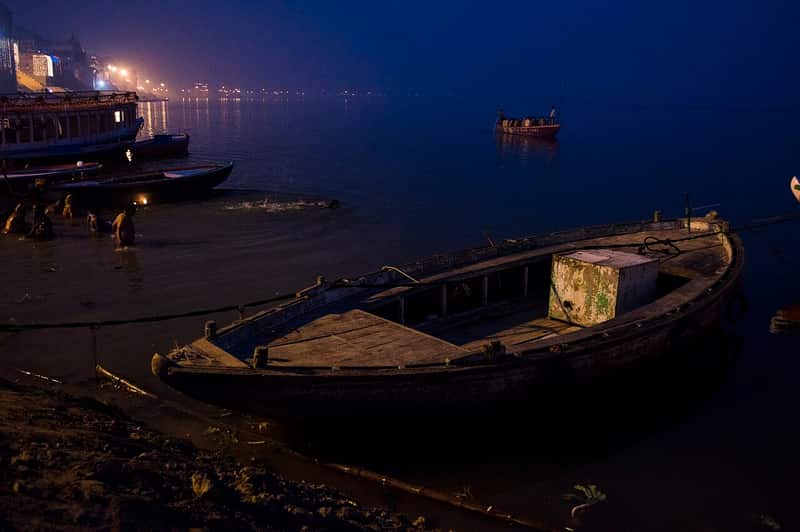
Varanasi, also known as Kashi and Banaras, stands as one of the oldest continuously inhabited cities in the world. Located on the banks of the sacred Ganges in Uttar Pradesh, this ancient city has witnessed the rise and fall of empires over more than five millennia.
Key Takeaways
- Origins in Ancient Mythology
- Varanasi in the Vedic Period
- Medieval Transformation
- Modern Era and Heritage Preservation
Origins in Ancient Mythology
Hindu mythology traces the founding of Varanasi to Lord Shiva, who is believed to have created the city as his divine abode. According to the Kashi Khand of the Skanda Purana, when Shiva and Parvati moved to Kashi, Shiva declared that any soul who died in Varanasi would be liberated from the cycle of rebirth.
The name Varanasi is derived from the two rivers Varuna and Asi that flow through the city. Some scholars believe the city dates back to the 11th century BCE, making it older than Athens, Cairo, and Jerusalem.
Religious Significance
One of the seven sacred cities (Sapta Puri) in Hinduism
Continuous Inhabitation
Never abandoned in over 5,000 years of recorded history
Varanasi in the Vedic Period
Varanasi finds mention in the Rigveda, one of the oldest known texts composed between 1500 and 1200 BCE. The city was a thriving center of trade, learning, and spirituality during the Vedic period.
During the 6th century BCE, the Buddha is believed to have given his first sermon at nearby Sarnath, establishing the region as a vital center of Buddhist learning.
Medieval Transformation
The medieval period brought tremendous changes to Varanasi. Despite periods of destruction, the city spirit endured. The Mughals, particularly Akbar, patronized the city and contributed to its architectural heritage.
The Bhakti movement flourished in Varanasi. Saints like Kabir and Tulsidas composed their immortal works here. Kabir challenged religious orthodoxy and created a syncretic spiritual tradition.
Modern Era and Heritage Preservation
The British colonial period brought new administrative structures but also threats to Varanasi heritage. However, the ghats, temples, and cultural institutions survived due to the devotion of local communities.
Today, Varanasi continues to be a living museum of Indian civilization, attracting millions of pilgrims, scholars, and tourists annually.
Quick Tips
Varanasi is among the world's oldest continuously inhabited cities, with evidence of settlement dating back to 800 BCE. Founded by Lord Shiva according to Hindu mythology, it has been a center of spirituality for over 5,000 years.
Frequently Asked Questions
Was this article helpful?
Your feedback helps us improve
Enjoyed this article?
Get the latest Varanasi travel tips delivered to your inbox.
Related Articles
 history
 History of Kashi Vishwanath Temple
The epic journey of one of Hinduism's most sacred shrines
history Varanasi Through the Mughal Era
How the Mughal Empire shaped Varanasi culture over three centuries
history Varanasi Under British Colonial Rule
The transformation of Varanasi under British administration