
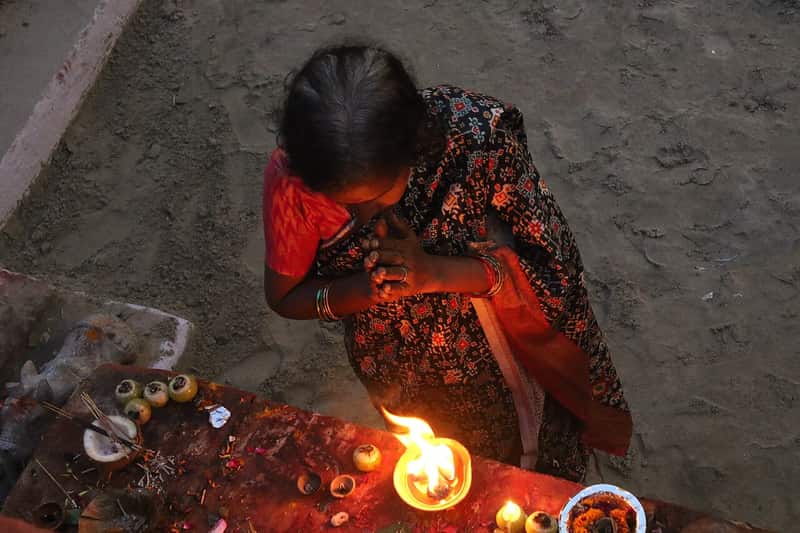
Fifteen days after Diwali, the city of Varanasi lights a second, older festival of lamps. On Kartik Purnima, the full-moon night of the Hindu month of Kartik, the gods are said to descend from heaven to bathe in the Ganga, and the city welcomes them by turning every one of its 84 ghats into a single river of fire. Dev Deepawali is the most beautiful night in one of the oldest living cities on earth, and this guide tells you exactly how, when and from where to witness it.
Key Takeaways
- The Night the Gods Come Down
- A Million Lamps
- Ganga Mahotsav
- Where to Watch
The Night the Gods Come Down
According to Hindu belief, Kartik Purnima is the night when Lord Shiva, Lord Vishnu and the entire host of the gods step down from the heavens to bathe in the holy Ganga at Varanasi. A dip in the river on this single night is held to be equal in merit to ten thousand ordinary baths, so pilgrims who cannot travel to a great Kumbh Mela have long treated this evening as a small Kumbh of their own. The same full-moon night commemorates the slaying of the demon Tripurasura by Shiva, which is why the festival also carries the older name Tripurotsav — the victory of light over darkness, celebrated a full fortnight after Diwali. Whole families walk the long riverfront circumambulation from Dashashwamedh to Panchganga through the night, singing bhajans and stopping at every shrine, so that the festival becomes not one moment but a journey of hours along the water.
Because the whole fortnight of Kartik is held sacred, the city builds toward this one night for weeks. Temples conduct continuous aarti, the riverfront is swept and whitewashed, and families everywhere buy fresh clay diyas by the hundred, so that by purnima the lanes smell of wet clay and ghee. By late afternoon on purnima the ghats begin to fill with sadhus in saffron, newlyweds in Banarasi silk, schoolchildren in orderly groups and travellers from every continent. The mood is part pilgrimage, part carnival and part family picnic, and the autumn-swollen Ganga — black, glossy and fast-moving — waits below to carry a million flames on its back. Even the boats are in their festival dress, decked with marigold garlands and small paper lanterns, so that the crowd arriving for the lighting is itself part of the pageant.
A Million Lamps
The decoration begins weeks in advance, when volunteers from temples, colleges and neighbourhood committees start shaping and baking clay diyas by the lakh, soaking their wicks in ghee and stacking them in huge pyramids along the ghat steps. On the evening itself those diyas are laid out in waves, spirals, temple silhouettes and long unbroken chains, using patterns that have been passed down within families for generations. As dusk turns to darkness the ghats are lit one after another, so that a wave of fire appears to roll down the river from Assi to Rajghat. The most photographed display is at Panchganga Ghat, where five sacred rivers are said to converge and where the walls of lamps rise well above a man's head.
At the hour of the great aarti the temple bells roll across the water, and the ghats answer with the sound of ten lakh flames burning quietly in oil. Estimates vary, but the figure most often quoted is around ten lakh — a million — clay lamps glowing along the riverfront, their light doubling in the black water until the river looks like a spilled sky. Around the shore, pilgrims also set small diyas adrift on leaf boats with flowers and coins, so the river carries its own procession of travelling flames. This is the moment everyone has come for, and it lasts, in its fullest glory, for only a few hours; by the small hours the flames die down one by one and the ghats return to their everyday selves, as if the fire had never been.
Ganga Mahotsav
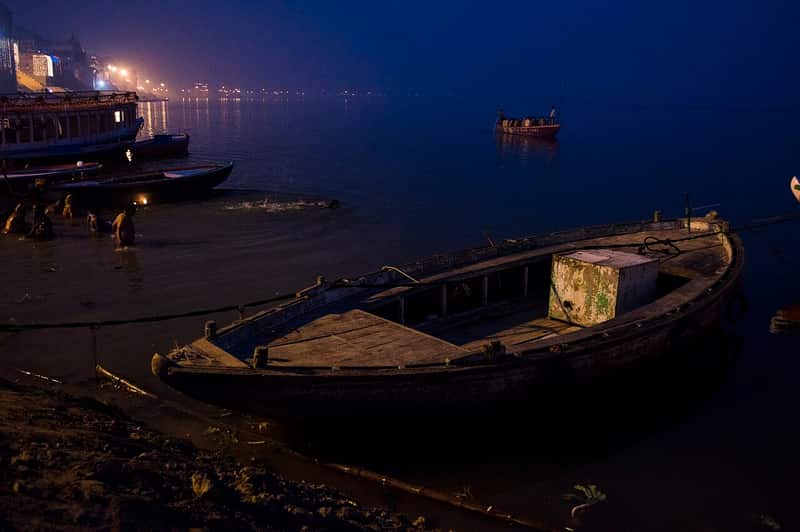
Dev Deepawali is the high point of the Ganga Mahotsav, the week-long festival of music, dance and crafts that the Uttar Pradesh government and the city's cultural institutions stage along the riverfront. Every evening leading up to purnima, concerts are held on a large stage erected near Dashashwamedh Ghat, where classical musicians, playback singers and folk troupes from across India perform against the backdrop of the burning ghats. The Mahotsav also brings craft bazaars selling Banarasi silk, brass idols, wooden toys and paper lanterns, so visitors arrive in the late afternoon to shop and listen, and then simply stay for the lighting. The last evening, on purnima itself, the stage programme is timed to end precisely as the first lamps are lit, so the music hands the night over to the fire.
The Mahotsav's own aarti ceremony is a production in itself: a fleet of decorated boats, musicians, dancers and a hundred priests in saffron performing the fire ritual on the water at Dashashwamedh. Similar ceremonies are staged simultaneously at Rajendra Prasad Ghat and Assi Ghat, each with its own crowd and its own atmosphere. Purists will tell you that the true festival is not the staged one but the one that happens by itself — the millions of anonymous diyas, the families eating sugarcane and roasted gram on the steps, the boatmen poling their small skiffs between the flames. Both festivals, the staged and the unscripted, belong to the same night, and the wise visitor gives time to each. Watch the staged aarti first from the shore, and take to the water afterward, when the lamps are at their brightest and the music has gone quiet.
Where to Watch
For most people the answer is simple: buy a ticket for one of the hundreds of boats that line the ghats from early evening. State-run UPTDC boats and private operators all sail the same short route past Dashashwamedh, and a seat on the water gives you the mirror image — lamps above, lamps reflected below — that you can never see from the shore. If you prefer dry land, the best views are from the middle of Dashashwamedh's wide steps or from the open terrace near the Ganga Mahotsav stage, though both fill early, and the police cordons close the lowest steps once the aarti begins. Locals often prefer the quieter end of the stretch at Rajendra Prasad Ghat, where the crowd is thinner and the lamps stretch away into the distance like an unbroken river of gold.
Whichever viewpoint you choose, arrive much earlier than you think you need to. The steps begin filling by four in the afternoon, boat queues form before sunset, and by the time the aarti begins the riverfront is one dense, patient crowd. Carry a bottle of water, wear warm clothes — the river breeze in late November is genuinely cold — and decide beforehand where you will meet your group after dark, because phones work, but patience in a crowd of a million people works better. Keep your boat ticket and your ghat name on a note in your pocket, and let the festival's own currents carry you; the one certain way to miss the beauty of this night is to fight it. Keep the evening's programme loose, too — the night's best moments are rarely on any schedule.
Dashashwamedh Ghat
The grandstand view — main aarti, biggest crowd, closest to the Mahotsav stage. Arrive before 4 pm to hold a step.
A boat on the water
The classic choice — reflections on both sides, wind in your face. Book in daylight; night tickets are hard to find.
Rajendra Prasad Ghat
Thinner crowds, its own aarti, and lamps receding into the distance — the classic long photograph.
Panchganga Ghat
The tallest diya walls and the most spectacular displays of the night, slightly off the main crush.
Assi Ghat
South-end favourite of locals and students, with its own aarti and a friendlier, smaller crowd.
Photography at Dev Deepawali
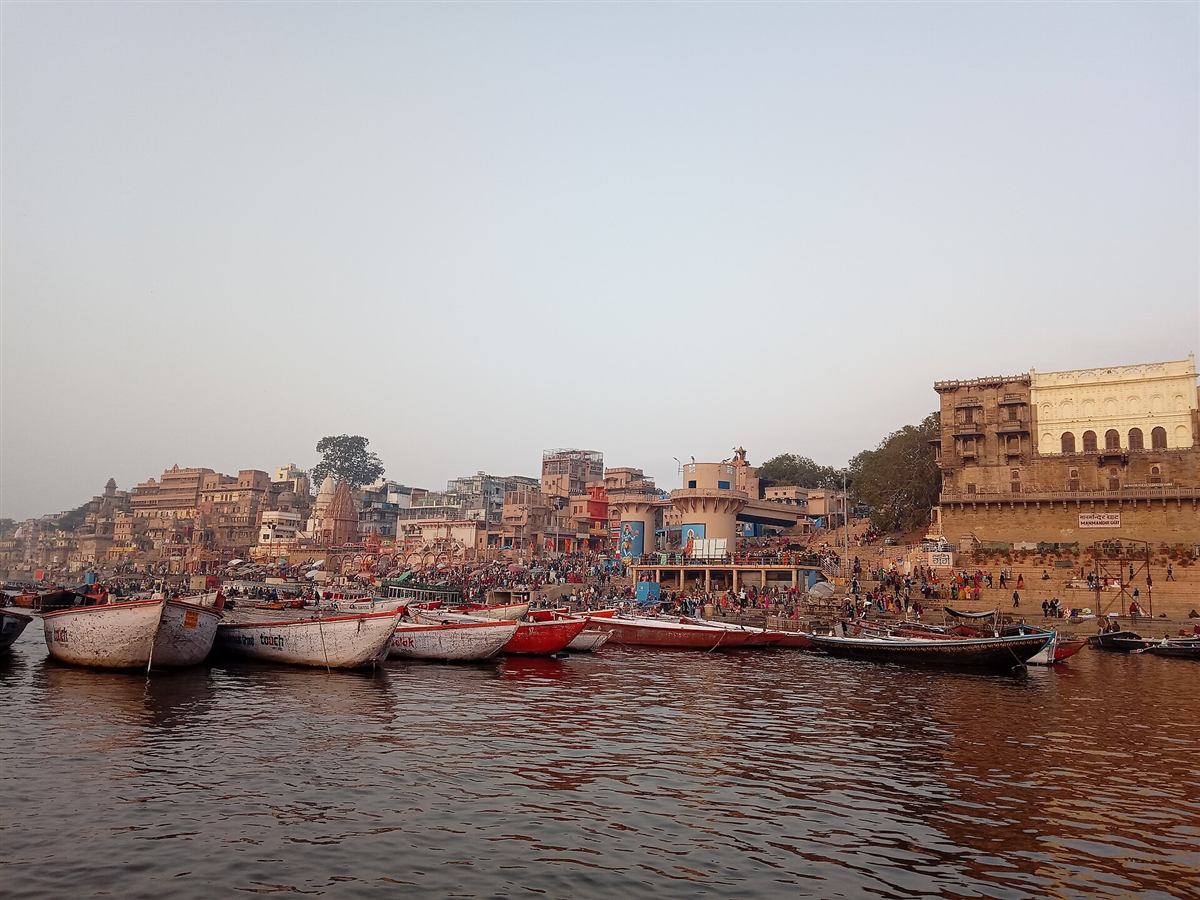
Dev Deepawali rewards photographers who plan ahead. Bring a tripod, because by eight in the evening the light is gone and the flames are small, moving sources of light that long exposures turn into rivers of gold. A lens with a wide aperture will capture the floating diyas and the faces of pilgrims lit by them, while a telephoto compresses the rows of lamps into a single dense band of fire. A neutral-density filter helps where the reflections are brightest, and a wide-angle lens from a low step makes the walls of diyas tower over your frame. Arrive in daylight to compose your foreground, because after dark the steps become a moving wall of people and every tripod position is fought over.
There are two classic hours: twilight and the deep night after the aarti. Just before sunset the sky turns indigo and the first lamps are lit against it — this is the purest postcard of the evening. Later, after ten, the crowds thin and the river settles; the reflections are longest and the water becomes a sheet of fire. For the aarti itself, focus on the priests' flame circles and the smoke rising through the lamps, which the long exposure turns into ribbons. A few practical cautions: keep your gear high and dry in the boats, which rock with every passenger, and carry a small torch, because the steps are uneven and the way down is long. And remember that the lamps burn brightest early — by midnight the show fades as quietly as it began.
Tripod
Non-negotiable after 7 pm — only long exposures capture the glow.
Twilight hour
Shoot the first lamps against the indigo sky, just after sunset.
Boat photography
Hold your camera high, use a short strap, and shoot from the stable centre of the boat.
Foreground
A single lit diya or a boat silhouette in the frame gives the shot its scale.
Practical Guide
Get to Varanasi a day or two early if you can — the city is transformed for the festival, and the Mahotsav's own evenings are worth a night each. On the day itself, leave your hotel by mid-afternoon, because the roads near Godowlia and the ghats close to traffic and every cycle-rickshaw is taken. Trains arrive and depart all night during festival week, so early-morning departures are easy; the nearest useful station is Varanasi Junction, with a prepaid taxi stand outside, and the airport at Babatpur is about half an hour from the city by taxi. Book your hotel weeks ahead if you plan to stay through purnima, especially anything near Assi or with a river view, and carry your passport or ID for the hotels, which register every foreign guest.
The festival is safe, and police and volunteers line every ghat, but a crowd of a million asks for simple discipline: leave valuables at the hotel, keep your phone in a front pocket and do not take the stairs in the crush of the aarti hour — wait on a higher step and let the surge pass. The administration sets up help desks and lost-child points along the ghats, and the police numbers are posted on boards at every major ghat. For an evening meal, eat before you reach the ghats, as the food stalls near Dashashwamedh are packed. And above all, enjoy the one thing money cannot buy on this night: a seat on a boat, drifting in the middle of the Ganga, while the oldest living city in the world burns with a million quiet lights around you.
Transport
Varanasi Junction is the hub; walk or take a prepaid taxi, as private cars stop near the ghats.
Hotels
Book 3-4 weeks ahead for purnima; Assi and the ghat-side lanes fill first.
Boat tickets
Buy from the official counters on the ghat in daylight to avoid inflated night prices.
Weather
Mid-20s by day, sharply cold by the water at night — carry a jacket.
Crowd safety
Avoid the narrow stairs at aarti time; stay on the wide middle steps and keep children close.
Quick Tips
Plan for a long, patient evening: arrive by 4 pm, eat before you reach the ghats, and book your boat ticket in daylight — the best seats go first.
Frequently Asked Questions
Was this article helpful?
Your feedback helps us improve
Enjoyed this article?
Get the latest Varanasi travel tips delivered to your inbox.
Related Articles
 Spiritual
 Meditation in Varanasi: A Complete Guide
Varanasi is one of the worlds oldest centers of meditation practice. This guide covers the best meditation spots, techniques suited to the citys energy, and how to deepen your practice.
Spiritual Yoga Teacher Training in Varanasi
Varanasi is an ideal location for yoga teacher training, combining ancient wisdom with authentic practice environments. Several ashrams and institutes offer certified programs.
Spiritual Sacred Rituals You Can Witness in Varanasi
Varanasi offers opportunities to witness rituals that have been performed continuously for thousands of years. From daily aarti to special ceremonies, these rituals connect visitors to India's ancient past.