
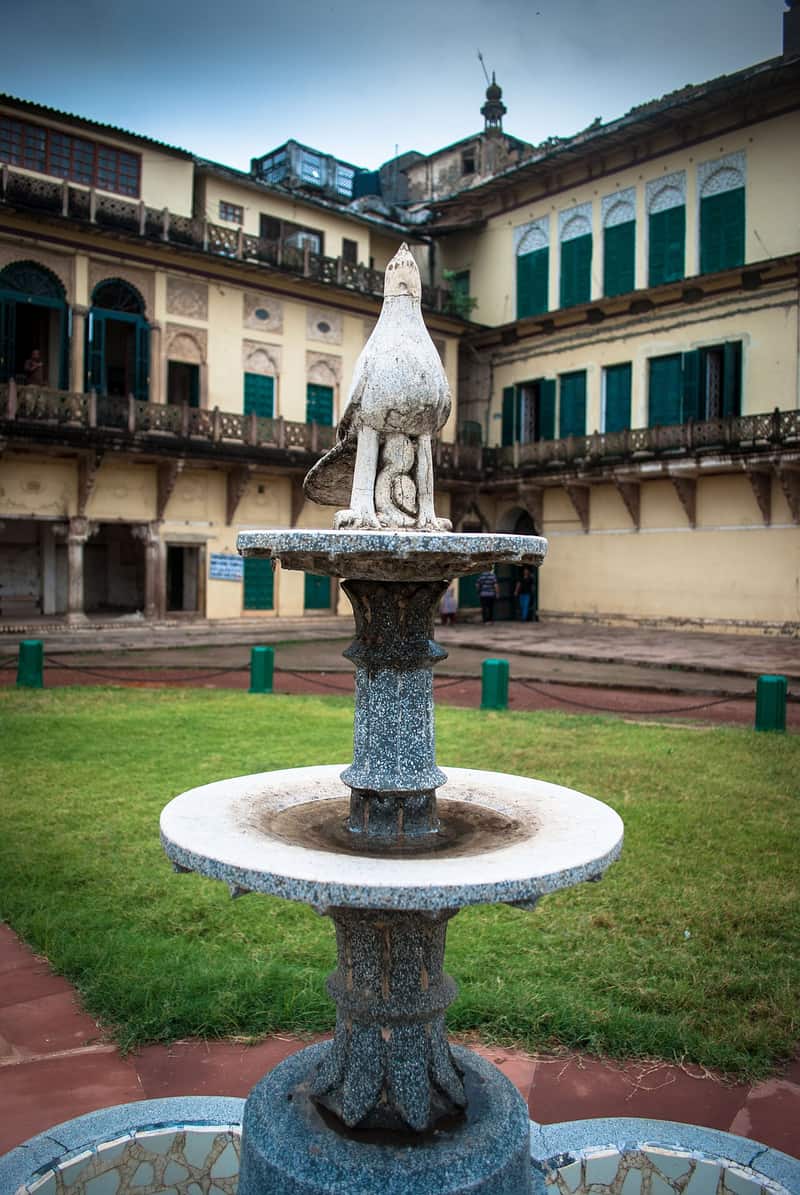
Across the Ganga from the burning ghats and temple spires of Varanasi rises the sandstone silhouette of Ramnagar Fort, the seat of the Kashi Naresh for nearly three centuries. Part fortress, part palace, part living museum, it guards the eastern bank of the river like a stone sentinel. This guide explores the fort's history, its extraordinary collections, and the ways to see it at its most beautiful — at dawn, from the water.
Key Takeaways
- Across the River
- A Fort of the Kashi Naresh
- The Palace Museum
- Ramnagar Ramlila
Across the River
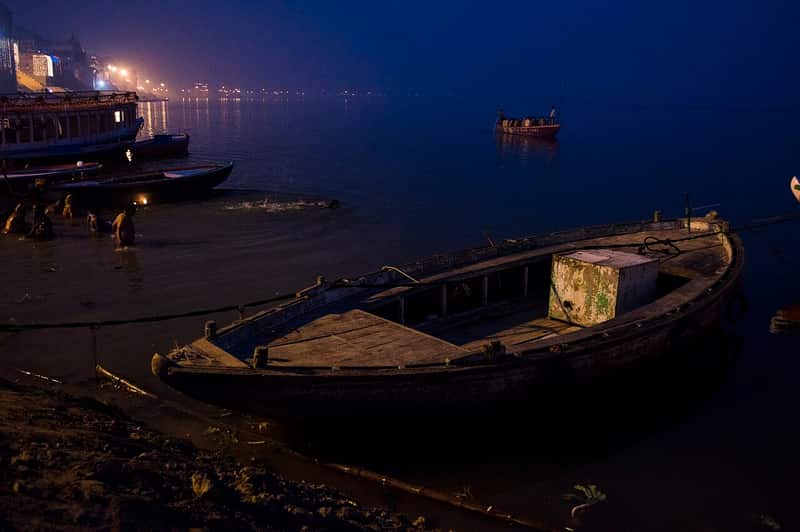
The journey to Ramnagar Fort begins on the water. From the ghats of Varanasi, a boat carries you across the broad, slow expanse of the Ganga, and as the great river slides beneath you, the fort takes shape on the eastern bank like a mirage made of honey-coloured sandstone. The crossing takes little more than half an hour by motorboat, and it is a journey of contrasts: behind you the teeming, chanting city, ahead the silent ramparts and bastions of a palace that has watched the river for three hundred years. Villagers on the far bank gather at the water's edge to wash clothes and cattle, and the fort watches over them as it has watched over every generation that has farmed these plains.
Approaching the fort by water is the way it was always meant to be seen. The main entrance, with its great arched gateway, faces the river, and the fort's long walls run along the bank like an extended arm guarding the crossing. As the boat draws close, details emerge — the carved balconies, the slender turrets, the small ghat where the maharaja's barge was once moored. For the first-time visitor, this approach is the essential introduction: the fort reveals itself slowly, majestically, as if it too is emerging from the morning mist.
A Fort of the Kashi Naresh
Ramnagar Fort was built in the mid-eighteenth century by Balwant Singh, the first of the dynasty that would rule Kashi as the Kashi Naresh. The fort is a fusion of Mughal and Indian architectural styles — a sandstone statement of power raised at a time when the old kingdom was navigating the shifting politics of an India in transition. It served as the residence of the royal family and the administrative heart of the Benares estate, a seat of ritual authority as much as political power. The great courtyard, the durbar halls, and the temple within its walls were all designed to project the image of a king who was both a ruler and a guardian of the holy city.
For the maharajas of Banaras, the fort was more than a home; it was the symbolic centre of their kingship. The Kashi Naresh remains, even today, the highest religious authority of Varanasi, and it is from Ramnagar that the royal family has long presided over the city's most sacred rituals. The fort's courtyards have hosted coronations, weddings, and the great festivals of the kingdom, and its walls have absorbed the history of a city that never stopped living. Walking through its halls, one feels the weight of continuity — a dynasty, a river, and a faith all still flowing.
The fort's architecture rewards careful attention. Its ramparts blend the crenellations of a fortress with the balconies and jharokhas of a palace, and its courtyards are arranged so that the river is never far from view. The main palace building rises in tiers, its ochre walls catching the light differently at every hour of the day. Within the complex stand temples and gardens, and the royal bathing ghat descends to the water in a long flight of stone steps. Every element speaks of a court that understood its kingdom as a sacred duty, with the Ganga not a boundary but the living heart of the realm it guarded. Even the fort's famous astronomical observatory, added in the eighteenth century, points skyward as if the dynasty sought to read its fortune in the same heavens that blessed the holy city across the river.
The Palace Museum
The heart of the fort for most visitors is the palace museum, a remarkable collection that reads like a biography of the royal family and of Banaras itself. Among its treasures are vintage cars and horse-drawn carriages once used by the maharajas, their polished metal and leather preserved as if the royal garage were closed only yesterday. The museum also houses an extraordinary array of weapons — swords, shields, and firearms — along with hunting trophies and an armoury that speaks of the martial side of the Kashi Naresh.
Beyond the objects of power are the objects of intellect and faith: the museum's library holds thousands of rare manuscripts in Sanskrit, Persian, and Hindi, including illuminated texts and royal records of immense historical value. A separate section is devoted to the palki and palanquins of the royal processions, and to the elaborate costumes worn during the Ramlila. Every gallery tells the story of a court that balanced Mughal sophistication, Hindu devotion, and the peculiar genius of Banaras itself. For historians the collection is a treasure; for the casual visitor, it is a journey through three centuries of Indian royalty.
Ramnagar Ramlila
Every autumn, the fort becomes the stage of the Ramnagar Ramlila, widely regarded as the oldest and grandest Ramlila in the world. The performance, begun in the 1830s under the patronage of the Kashi Naresh, is not a theatrical show in the modern sense but a vast, month-long ritual pageant that unfolds across Ramnagar and its countryside. Each night, tens of thousands of spectators follow the actors — residents of Ramnagar who are chosen for their families' hereditary roles — as they move from one performance site to the next, enacting the epic of Rama in scenes of astonishing scale.
The Ramlila of Ramnagar is unique in its scale and authenticity. The actors, known as swaroops, are treated as living incarnations of the gods for the duration of the festival; the audience, seated on the fort's ramparts or on the open ground, participates not as spectators but as devotees. The dialogue is the original text of Goswami Tulsidas, recited in the Awadhi language as it has been for generations, and the processions, costumes, and fireworks belong to a tradition centuries deep. To witness even a single night of this Ramlila is to step inside the living faith of Kashi — theatre, scripture, and festival fused into one.
The Ramlila of Ramnagar is also a remarkable example of living patronage. The royal family continues to finance the festival, supplying the costumes, the fireworks, and the vast illuminated backdrops that transform the open-air stages into palaces and forests. The craftsmen of Ramnagar spend months preparing the masks and chariots, and the tradition provides livelihoods to hundreds of families in the town. In an age when such pageants have become museum pieces elsewhere, the Ramnagar Ramlila remains a working ritual, performed with the same structure and spirit with which it began — a living link between the Kashi Naresh, the town, and the epic that binds them together. Scholars travel from across the world to study it, but for the people of Ramnagar it is simply the season when the gods walk among them once again.
The Fort at Dawn
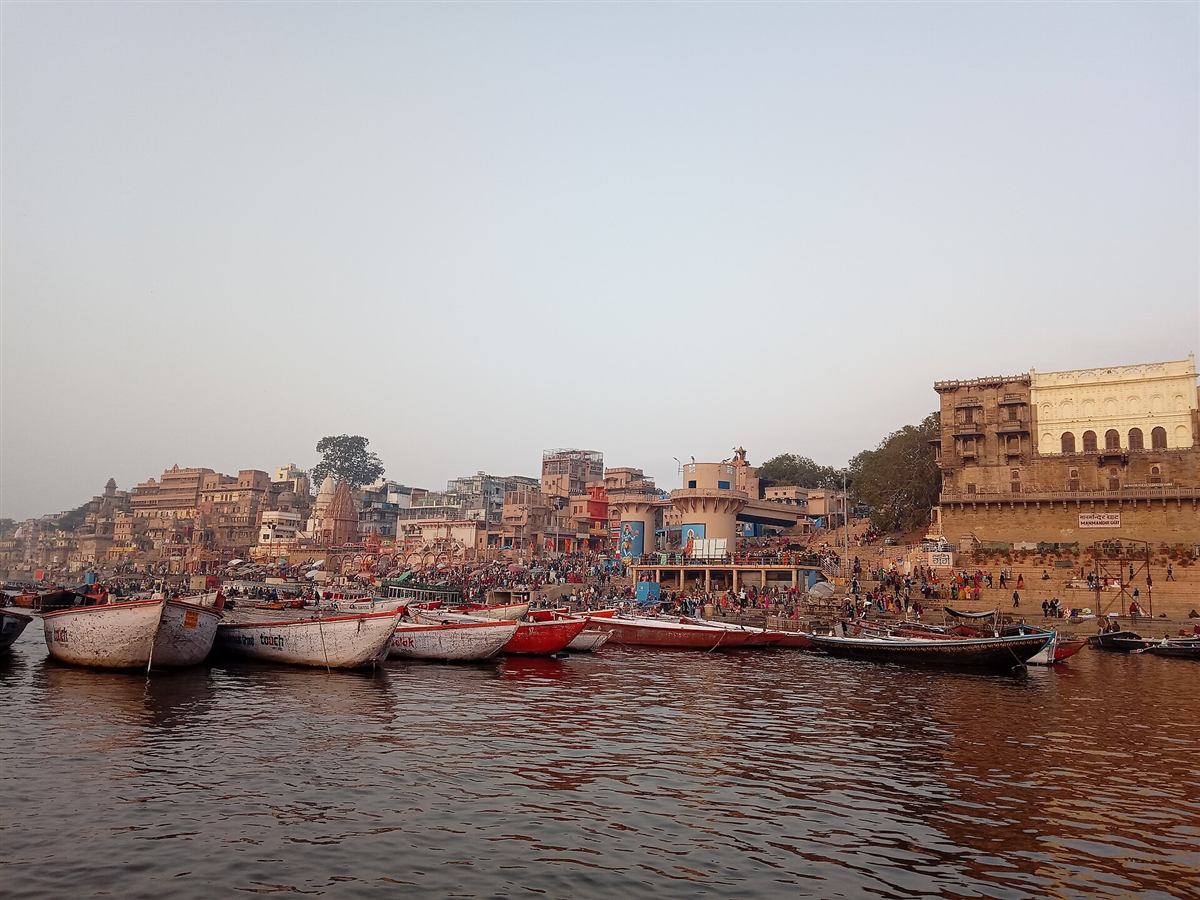
The most beautiful hour at Ramnagar is the one that most visitors miss: dawn. As the sun rises over the eastern bank, the fort's sandstone turns from grey to amber to gold, and the river below carries the light in long, shimmering bands. From a boat on the water, the fort appears to float between sky and river, its ramparts softened by the mist that still clings to the Ganga. Photographers consider this the definitive view of Ramnagar — the fort as it has been seen for centuries, waking slowly above its own reflection. Fishermen cast their nets in the foreground, and the only sound is the lap of water and the cry of gulls, a silence that seems to belong to another century.
On the fort's own side, the dawn brings a different spectacle: the first rays striking the carved balconies, the morning aarti at the fort's small ghat, and the old city of Varanasi visible across the water, its temple spires and ghats emerging from shadow. The contrast is profound — the living city waking on one bank, the sleeping palace on the other. For those who can rise early, taking a sunrise boat trip past Ramnagar is one of the most rewarding experiences of a Varanasi visit, a moment of pure, unhurried beauty before the day's crowds arrive.
Practical Guide
Ramnagar Fort stands on the eastern bank of the Ganga, directly opposite Assi Ghat, and is best reached by ferry from the Varanasi side. The fort is open to visitors during the day, though large sections remain the private residence of the royal family. Allow half a day for the crossing, the museum, and the grounds, and check the timings of the Ramlila if you are visiting in October or November.
Ferry
Boats and motorboats cross from Assi Ghat in about 20 minutes; bargain the fare before boarding.
Timings
Fort and museum roughly 9:00 AM to 5:00 PM, with a break at noon; closed on some holidays.
Entry
Modest entry fee; camera fee extra. Some halls may close without notice.
Museum
Vintage cars, weapons, manuscripts, and royal regalia; guided tours in Hindi and English.
Ramlila
October-November; free to watch, arrive early for a good spot on the ramparts.
Best time
Sunrise from the river, or the golden hour before sunset when the sandstone glows.
Quick Tips
Take a sunrise boat from Assi Ghat — the fort is at its most photogenic from the water, and the ferry arrives before the museum crowds.
Frequently Asked Questions
Was this article helpful?
Your feedback helps us improve
Enjoyed this article?
Get the latest Varanasi travel tips delivered to your inbox.
Related Articles
 Travel
 Best Time to Visit Varanasi: Season-by-Season Guide
When to go for perfect weather, the best festivals, and the fewest crowds
Travel Varanasi Hostels Guide: Best Budget Hostels & Dorms
Complete guide to hostels in Varanasi — dorm prices, best locations, amenities, and tips for budget travelers.
Travel Varanasi Luxury Hotels Guide: 5-Star & Heritage Stays
Guide to the best luxury and heritage hotels in Varanasi — prices, amenities, ghat views, and booking tips.