
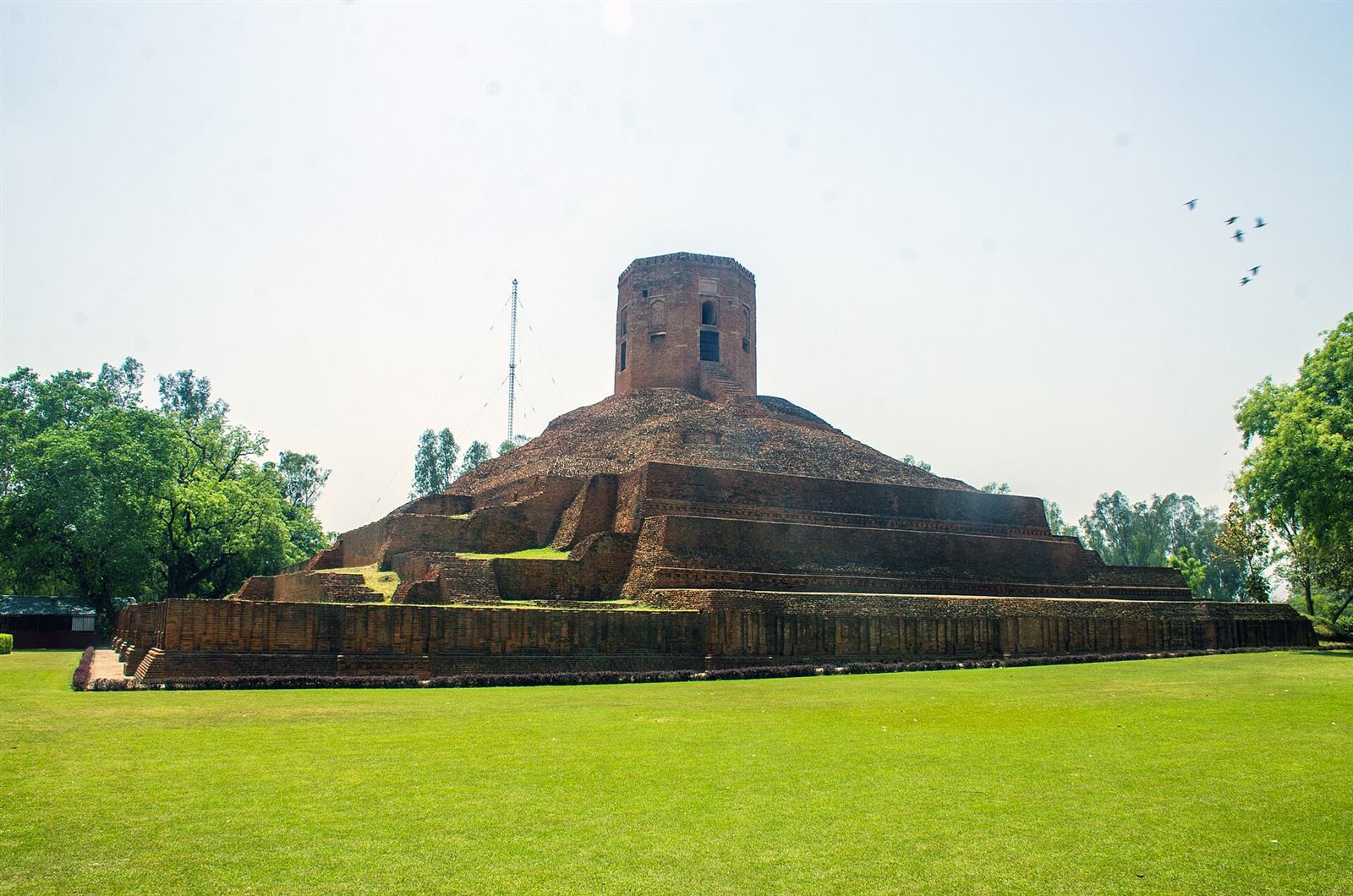
सारनाथ वाराणसी से दस से तेरह किलोमीटर उत्तर की मृग भूमि है, जहां बुद्ध ने पहला उपदेश दिया था। धमेक स्तूप गुप्तकालीन ईंटों का 43.6 मीटर ऊंचा ढांचा है, अशोक का सिंह शिलांक — राष्ट्रीय प्रतीक — संग्रहालय में सुरक्षित है, और पूरा स्थल ढाई से तीन घंटे में आराम से चल लिया जाता है। एक तारीख याद रखें — शुक्रवार, जब संग्रहालय बंद रहता है; स्थल खुद हर दिन सूर्योदय से सूर्यास्त तक खुला रहता है।
कैसे पहुंचें
| टैक्सी राउंड ट्रिप | ₹600-1,200, ड्राइवर के इंतजार के साथ। |
| ऑटो राउंड ट्रिप | ₹400-600; पहले पूरा किराया तय कर लें। |
| शेयर ऑटो | सस्ता; गोदौलिया से सारनाथ वाली लाइन पूछ लें। |
| उबर और ओला | शहर और कैंट से मिल जाते हैं। |
धमेक स्तूप
धमेक स्तूप इस स्थल का केंद्र है: 43.6 मीटर ऊंचा, 28 मीटर चौड़ा, गुप्तकाल में पहले उपदेश वाली जगह पर बना। इसे चढ़ा नहीं जा सकता, और चढ़ने की जरूरत भी नहीं — इसके चारों ओर की परिक्रमा ही सही चाल है।
सुबह की रोशनी में नक्काशीदार ताकें और ईंट-काम का विस्तार साफ दिखता है। यहां की खामोशी ही असली चीज है; पर्यटक समूह और उनके ध्वनि यंत्र 10 बजे के बाद आते हैं।
अशोक स्तंभ और सिंह शिलांक
अशोक का स्तंभ कभी सारनाथ में खड़ा था, और उसका सिंह शिलांक — चार सिंह पीठ से जुड़े हुए — भारत का राष्ट्रीय प्रतीक है। शिलांक और स्तंभ दोनों अब सारनाथ संग्रहालय में हैं, पॉलिश बलुआ पत्थर में खुदे जो आज भी चमकते हैं।
स्तूप से पहले शिलांक देख लें — संग्रहालय की दीर्घा जल्दी भरती है, और इस वस्तु को अपने शांत मिनट मिलने चाहिए।
सारनाथ संग्रहालय
सारनाथ पुरातत्व संग्रहालय सुबह 9 बजे खुलता है और शाम 5 बजे बंद होता है — और हर शुक्रवार बंद रहता है। भारतीय आगंतुकों के लिए प्रवेश करीब ₹5 और विदेशियों के लिए लगभग ₹100 है; स्थल के साथ संयुक्त टिकट ₹20/₹250 में मिलता है।
संग्रहालय में 6,832 कलाकृतियां हैं, और दीर्घाओं में फोटो की बिल्कुल अनुमति नहीं है — इसलिए फोन की जगह आंखों से हॉल देखें।
चौखंडी स्तूप
मुख्य परिसर से थोड़ी पैदल दूरी पर चौखंडी स्तूप उस जगह को चिह्नित करता है जहां कहा जाता है कि मृग भूमि जाते हुए बुद्ध अपने पहले शिष्यों से मिले थे।
यह कम भीड़ वाला ईंटों का शांत टीला है, उसी खुले आसमान के नीचे। पैर साथ दें तो इसे सैर के अंत में रखें।
मूलगंधकुटी विहार
मूलगंधकुटी विहार, 1931 में महाबोधि सोसाइटी द्वारा बना, इस स्थल की बेहतरीन चित्रकारी समेटे है: भीतरी दीवारों पर कोसेत्सु नोसु की जापानी शैली में बुद्ध के जीवन की कथा।
हॉल खुला और शांत है, और चित्रों का क्रम बिना एक शब्द के पूरी कथा सुना देता है। सुबह के जप की गूंज के साथ कुछ देर अंदर बैठना इस स्थल का सबसे जीवंत अनुभव है।
मंदिर और विहार
| थाई मंदिर | सुनहरी छतें और लेटी हुई बुद्ध प्रतिमा। |
| तिब्बती मंदिर | प्रार्थना चक्र और जीवंत समुदाय। |
| श्रीलंकाई मंदिर | सफेद दीवारें और पढ़ने का कोना। |
| बर्मी मंदिर | मुख्य परिसर के सबसे पास; छोटी और सुखद सैर। |
मृग भूमि
इस स्थल का नाम ही मृग भूमि है, और हिरण अब भी यहां हैं — स्तूप के पीछे की वाटिकाओं में एक छोटा झुंड सुबह भर चरता रहता है।
लॉन के किनारे का बोधि वृक्ष बोधगया के वृक्ष का वंशज है, और उसके नीचे की जमीन पूरे स्थल की सबसे शांत सीट है।
स्थल का समय और शांत घंटे
स्थल का समय
सूर्योदय से सूर्यास्त, हफ्ते के हर दिन, शुक्रवार समेत।
शांत समय
सुबह 7 से 9 बजे, पर्यटक बसों के आने से पहले।
पहले संग्रहालय
सिंह शिलांक की दीर्घा सबसे जल्दी भरती है।
शाम की जोड़ी
शाम 6 बजे तक वापस, दशाश्वमेध की गंगा आरती के लिए।
संग्रहालय के नियम
असली जरूरतें
फोटो वालों के लिए
संग्रहालय के अंदर
दीर्घाओं में फोटो वर्जित।
संग्रहालय के बाहर
स्थल, लॉन और विहार कैमरे के लिए खुले हैं।
सुबह की रोशनी
स्तूप की नक्काशी सुबह 9 बजे से पहले सबसे अच्छी दिखती है।
हिरण
झुंड सुबह बाहर रहता है; लॉन से दूरी बनाए रखें।
शहर के साथ जोड़ें
शांत चक्कर
एक नज़र में
- ✓ संग्रहालय 9-5, शुक्रवार बंद; स्थल रोज खुला।
- ✓ प्रवेश करीब ₹5/₹100; कॉम्बो ₹20/₹250।
- ✓ टैक्सी ₹600-1,200; ऑटो ₹400-600 राउंड ट्रिप।
- ✓ पूरे स्थल के लिए ढाई से तीन घंटे रखें।
तुरंत जवाब
क्या संग्रहालय शुक्रवार को बंद रहता है?
हां, सारनाथ पुरातत्व संग्रहालय हर शुक्रवार बंद रहता है, लेकिन स्थल खुद खुला रहता है। सारनाथ की सुबह किसी और दिन रखें और पहले संग्रहालय जाएं — सिंह शिलांक की दीर्घा जल्दी भर जाती है।
प्रवेश शुल्क क्या है?
संग्रहालय भारतीय आगंतुकों से करीब ₹5 और विदेशियों से लगभग ₹100 लेता है; स्थल के साथ संयुक्त टिकट ₹20/₹250 में मिलता है। स्थल पर चलना निःशुल्क है।
आने-जाने का खर्च कितना है?
टैक्सी राउंड ट्रिप ₹600-1,200 की है, ड्राइवर के इंतजार वाली ऑटो राउंड ट्रिप ₹400-600 की, और शेयर ऑटो इससे सस्ते। उबर और ओला भी इस रास्ते चलते हैं — शहर से करीब 30-45 मिनट।
कितना समय रखना चाहिए?
ढाई से तीन घंटे: स्तूप, संग्रहालय, विहार, वाटिकाएं। सुबह 7-8 बजे निकलें तो देर के दोपहर के खाने और दशाश्वमेध की शाम की आरती के लिए वापस आ सकते हैं।
स्थल कब खुला रहता है?
हर दिन सूर्योदय से सूर्यास्त तक, शुक्रवार समेत। सुबह के शुरुआती घंटे ही शांत होते हैं — पर्यटक बसें 10 बजे के बाद आती हैं।
सिंह शिलांक क्या है?
यह अशोक स्तंभ का पॉलिश बलुआ पत्थर का शीर्ष है जो कभी सारनाथ में खड़ा था — पीठ से जुड़े चार सिंह, जिन्हें भारत का राष्ट्रीय प्रतीक बनाया गया। शिलांक और स्तंभ दोनों अब सारनाथ संग्रहालय में हैं।
क्या फोटो खींच सकते हैं?
संग्रहालय की दीर्घाओं के बाहर हां — स्थल, लॉन और विहार कैमरे के लिए खुले हैं। दीर्घाओं के अंदर फोटो पूरी तरह वर्जित है।
स्तूप के अलावा सारनाथ में और क्या है?
कोसेत्सु नोसु की 1931 की जापानी शैली की चित्रकारी वाला मूलगंधकुटी विहार, थाई, तिब्बती, श्रीलंकाई और बर्मी मंदिर, मृग भूमि खुद, चौखंडी स्तूप और संग्रहालय में अशोक स्तंभ के अवशेष।